Software Testing & QA
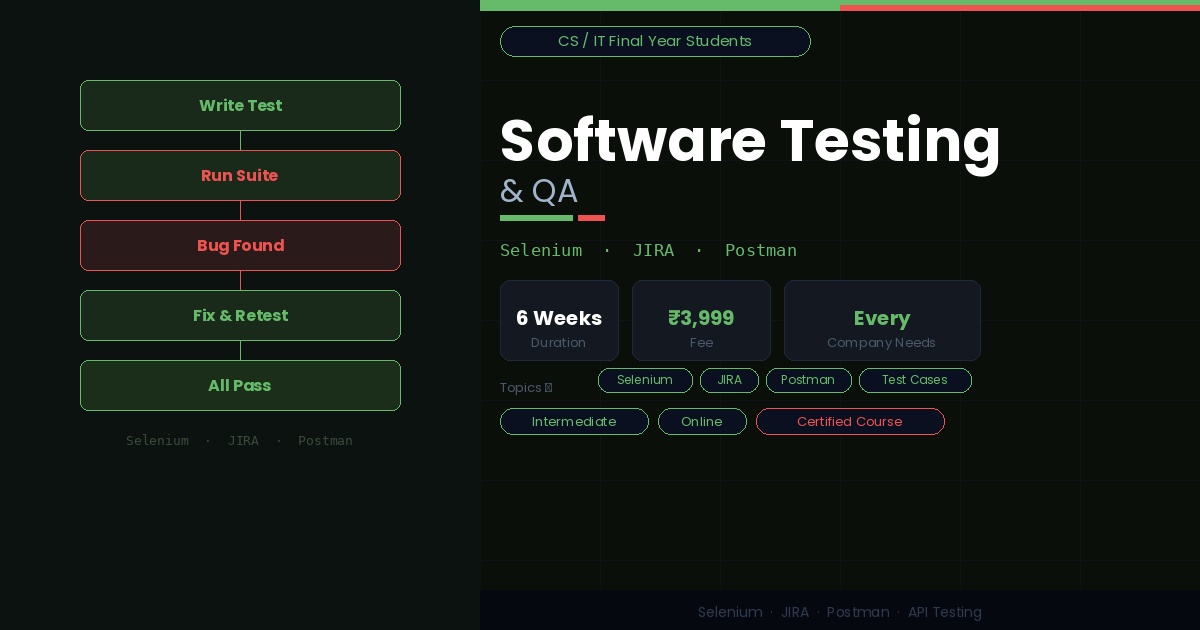
Every software company needs quality assurance professionals — and the demand is only growing. Learn manual and automated testing using Selenium, JIRA, and Postman, and build the skills that get you hired as a QA Engineer or Software Tester in top IT companies and MNCs.
About This Course
No software reaches users without going through quality assurance. QA engineers and software testers are essential members of every development team — responsible for ensuring that applications work correctly, perform under load, and deliver a reliable experience to end users.
Software testing is consistently ranked among the best entry-level IT career paths in 2026, with strong hiring across IT services companies, product companies, and MNCs. It is also one of the most accessible paths into the tech industry, as it combines structured thinking and communication skills with technical tools — making it ideal for final year CS and IT students.
This 6-week course covers both manual testing fundamentals and the automation tools that modern QA teams use daily. You will learn how to write test cases, report bugs professionally using JIRA, test APIs using Postman, and automate browser-based tests using Selenium. You will follow real software development workflows and understand how QA fits into agile teams.
By the end of this course, you will have completed a full testing project — including test plans, test cases, bug reports, and automation scripts — that demonstrates your capability to employers.
Curriculum Highlights
Week 1 — Software Testing Fundamentals
What is software testing and why it matters; types of testing: manual, automated, functional, non-functional; software development lifecycle (SDLC) and where testing fits; test levels: unit, integration, system, acceptance; introduction to Agile and Scrum for QA
Week 2 — Manual Testing & Test Case Writing
Writing effective test cases and test plans; test scenarios vs test cases; boundary value analysis and equivalence partitioning; exploratory testing techniques; introduction to JIRA: creating and tracking bugs; defect lifecycle management
Week 3 — API Testing with Postman
What is an API and how it works; HTTP methods: GET, POST, PUT, DELETE; using Postman to send requests and validate responses; writing and running API test collections; validating JSON responses; API authentication basics
Week 4 — Selenium Automation Basics
Introduction to test automation and when to use it; setting up Selenium WebDriver with Java; locating web elements: ID, XPath, CSS selectors; writing your first automated test script; running tests and reading results
Week 5 — Advanced Selenium & Test Frameworks
Page Object Model (POM) design pattern; TestNG framework: annotations, assertions, and test suites; data-driven testing; taking screenshots on test failure; integrating tests with Maven
Week 6 — Performance Testing & Capstone
Introduction to performance testing with JMeter; load testing basics; CI/CD integration for automated tests; capstone project: complete QA cycle for a sample application — test plan, test cases, bug reports, and automation suite
What You'll Achieve
Write professional test cases, test plans, and bug reports
Use JIRA to track defects and manage QA workflows in Agile teams
Test APIs confidently using Postman
Write and run automated browser tests using Selenium WebDriver
Apply the Page Object Model and TestNG framework in real projects
A complete QA portfolio project covering manual and automation testing
Job-ready for Software Tester, QA Engineer, and Automation Tester roles
Related Courses
Python Programming: Beginner to Job-Ready
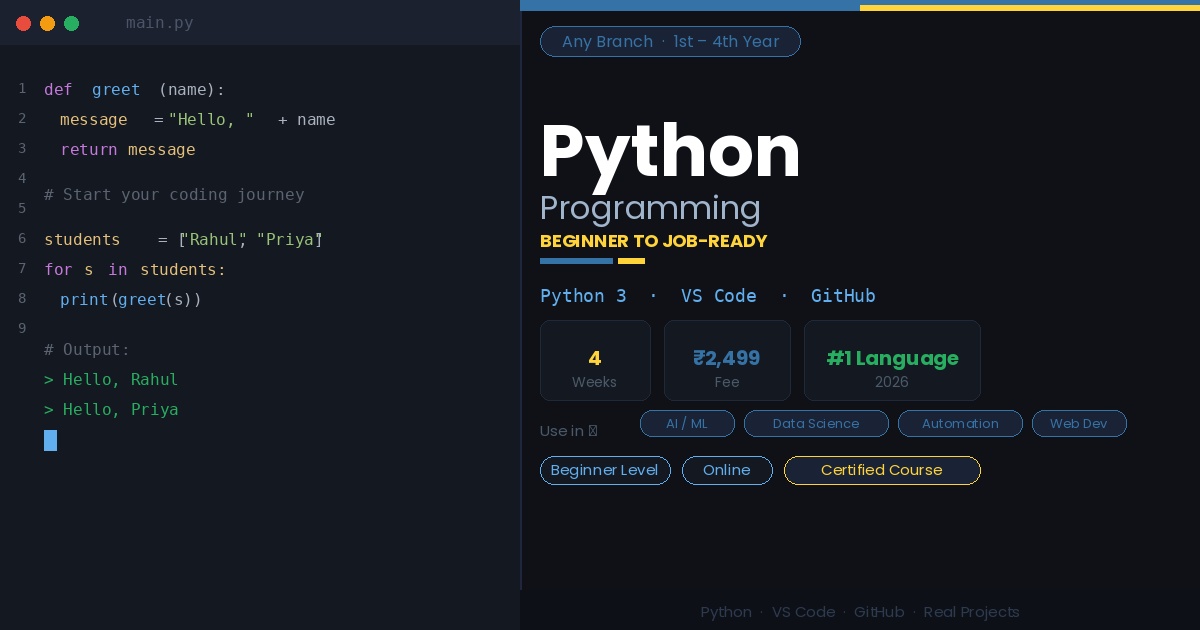
Learn Python from absolute scratch and become job-ready in just 4 weeks. Designed for engineering students from any branch, this course uses Python 3, VS Code, and GitHub to help you build real projects and launch your coding career.
Full Stack Web Development
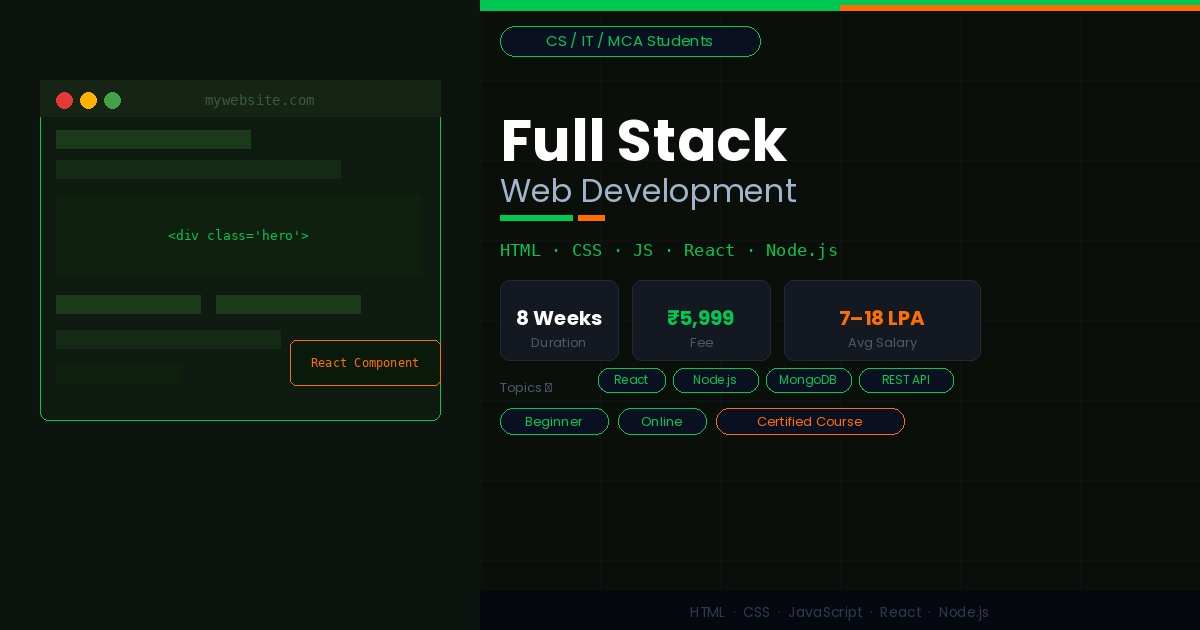
Master both frontend and backend development in one complete course. Build fully functional websites and web applications using HTML, CSS, JavaScript, React, and Node.js — and become a job-ready Full Stack Developer in 8 weeks.
Android App Development
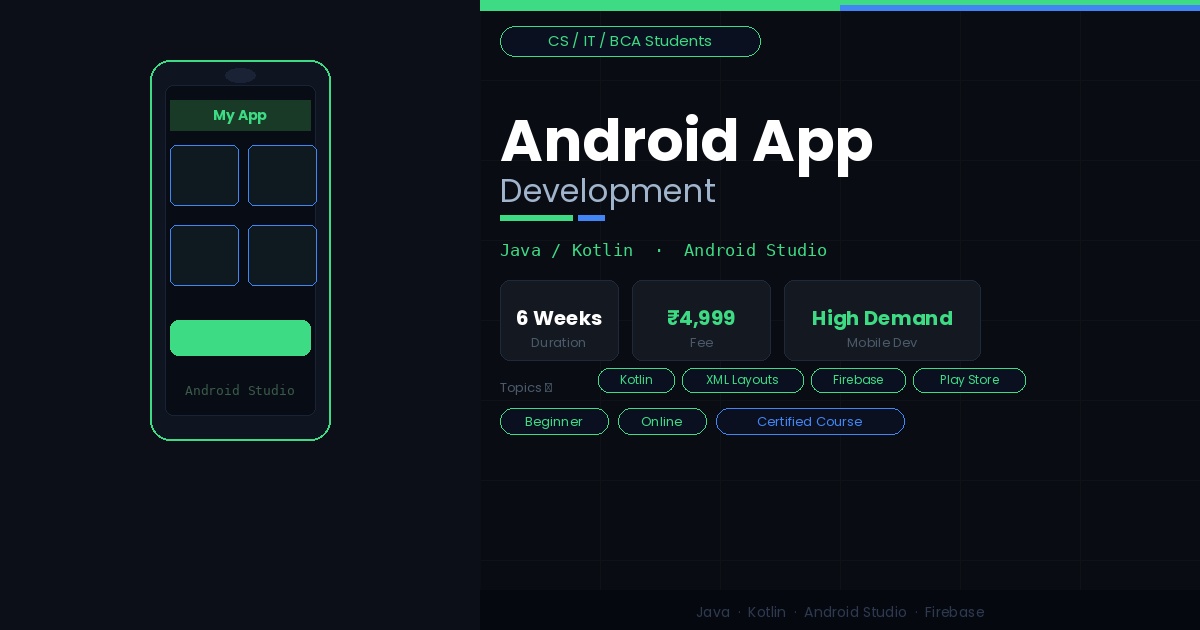
Build real Android apps from scratch using Java and Kotlin. Learn to design interfaces, handle user interactions, connect to the internet, and publish your app — all within 6 weeks using Android Studio, the official development platform.

